MLS Software Development & MLS Data Integration | ORIL

MLS Software Development: From Listing Data to Real Estate Products

Give your users accurate, fresh listings across every market you serve, and give your team a data foundation to build new features on. ORIL builds the technology layer around your MLS data: RESO Web API integrations, multi-MLS ingestion, normalization and enrichment, listing search, and analytics. Data access comes through your agreements with each MLS; ORIL builds everything you do with that data.

Discuss Your MLS Project

MLS Technology & Software Development

MLS Software Development Challenges We Solve

Connecting to an MLS feed is the easy part. The hard part starts after the first sync: inconsistent schemas, overlapping coverage, display rules, and data that isn’t ready for search or AI. Here’s where MLS-dependent products usually stall, and what fixing it changes.

Every MLS Has Its Own Data Model
Keeping Listings Current at Scale
Overlapping Coverage and Duplicate Listings
MLS Rules and License Terms
Legacy, RETS-Era Infrastructure
Data That Isn't Ready for Analytics or AI

RESO Data Dictionary adoption varies by MLS. Even when MLSs use RESO standards, local fields, lookup values, resource availability, and implementation details can differ. A product therefore needs a canonical model plus source-specific mappings rather than assuming every MLS exposes identical data.

Solutions:

  • Mapping to the RESO Data Dictionary plus a documented canonical model for local fields
  • Status and lookup normalization (StandardStatus vs. local MlsStatus)
  • Per-source mapping configuration instead of hard-coded logic
  • Schema change detection and alerting

What you gain: one consistent listing model that search, analytics, and product features can use regardless of the source MLS, while local source differences remain traceable.

Stale listings cost user trust fast. Keeping listings current means more than refreshing records. The pipeline has to detect status changes, media updates, removals, backfills, and missed changes while respecting source-specific refresh requirements.

Solutions:

  • Incremental replication keyed on modification timestamps
  • Scheduled and event-driven sync pipelines with retry and backfill
  • Media and photo processing pipelines
  • Reconciliation jobs that catch off-market and deleted records

What you gain: measurable sync freshness, fewer stale or off-market listings, and a product view that stays aligned with the source data.

When you pull from several MLSs, the same property can appear in more than one feed with different IDs, addresses, and photos. Without deduplication, search results and analytics both suffer.

Solutions:

  • Address standardization and geocoding
  • Entity resolution across listing IDs, parcels, and addresses
  • Source precedence rules per market
  • Unified property records with full source lineage

What you gain: a unified property identity with linked listing records across overlapping MLS coverage, so search and analytics can avoid double-counting while source records remain traceable.

MLS data-use rules depend on the MLS, feed type, agreement, and permitted use. IDX, VOW, and back-office access can impose different display, attribution, field-visibility, and refresh requirements. Products that ignore these risk losing access.

Solutions:

  • Configurable display and attribution rules per MLS and feed type
  • Field-level visibility controls tied to license scope
  • Audit logs for data usage and refresh compliance
  • Separation of licensed data by permitted use

What you gain: a product that respects each license by design, so compliance doesn’t depend on manual checks.

Some platforms still rely on RETS-era integrations or brittle legacy scripts. RETS is a deprecated legacy transport, while the RESO Web API is the modern approach for MLS data exchange. For platforms built around RETS-era integrations, migration is an opportunity to separate ingestion from application logic and modernize the surrounding architecture.

Solutions:

  • RETS to RESO Web API migration
  • Decoupling ingestion from application logic
  • Cloud-native, API-first architecture
  • Phased cutover with parallel runs and data validation

What you gain: a modern integration layer that’s cheaper to maintain and faster to extend.

MLS records are optimized for listing operations, not for every analytical or AI workflow. Historical status changes, property identity, source definitions, and external context often need to be modeled separately before they can support reliable analytics, valuation, or machine learning.

Solutions:

  • Listing history and status-change tracking over time
  • Enrichment with public records, geospatial, and market data
  • Structured extraction from remarks and descriptions
  • Data warehouse and feature-ready datasets

What you gain: clean, historical, enriched data your analytics and AI features can depend on.

Build an MLS Data Foundation Your Product Can Grow On

Solutions We Build

An MLS feed delivers records. Your users need search, insight, and workflows. We build every layer in between, from ingestion pipelines to the applications your customers and agents use every day.

MLS Data Integration
  • RESO Web API integrations, including MLSs and distribution platforms that serve their data
  • Multi-MLS ingestion into one pipeline
  • Incremental replication and full-load backfills
  • Scheduled and event-driven synchronization
  • Media, open house, member, and office resources
Data Normalization & Quality
  • Schema mapping to the RESO Data Dictionary and your canonical model
  • Normalization of statuses, lookups, units, and property types
  • Validation rules and data quality monitoring
  • Deduplication across overlapping MLS coverage
  • Change history and source lineage
AI on MLS Data
  • AI-powered search and conversational property discovery
  • Recommendations and buyer-to-listing matching
  • AVM and pricing models built on normalized listing history
  • Listing text extraction and classification from remarks
  • Lead scoring and routing
MLS-Powered Products
  • Listing search and property discovery
  • Brokerage platforms and agent tools
  • Real estate portals and marketplaces
  • Listing management and internal back-office tools
  • IDX-compliant listing display on broker and agent sites
diagram-image
Search, Geospatial & Discovery
  • Faceted search and advanced filtering at high listing volumes
  • Map-based search, polygons, and drive-time areas
  • Saved searches and new-listing alerts
  • Semantic and natural-language property search
Analytics & Property Intelligence
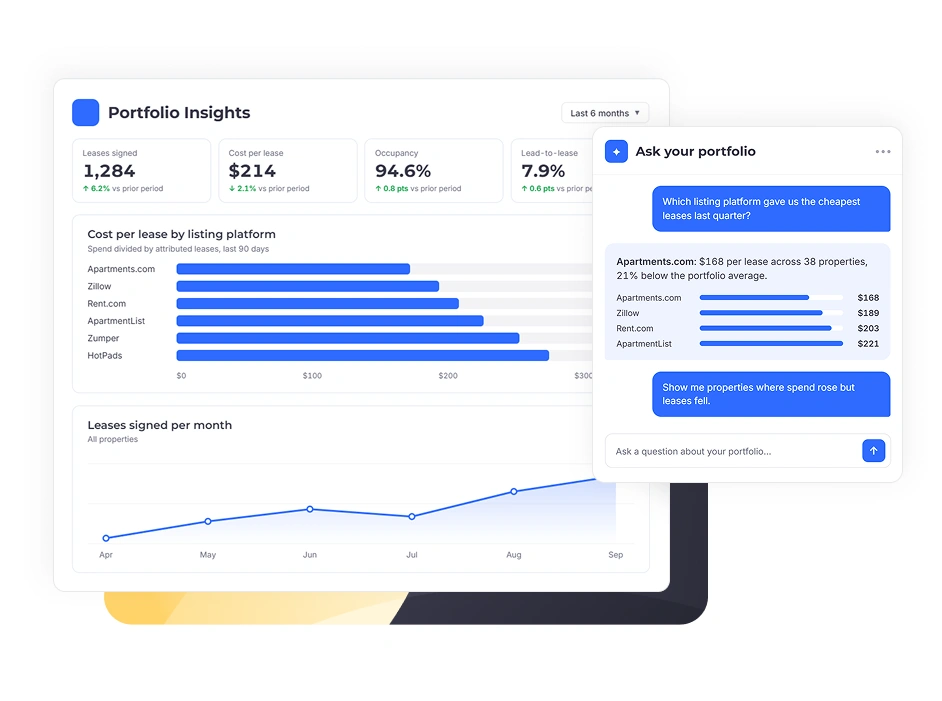
  • Market and listing analytics (inventory, days on market, price changes, absorption)
  • Dashboards and reporting for brokers, investors, and product teams
  • Comparable sales and valuation inputs
  • Data visualization for internal and client-facing use
System Integrations
  • CRM platforms and lead routing
  • Transaction management, PMS, and ERP systems
  • Data warehouses and BI tools
  • Public records, tax, and geospatial data providers
  • Internal business systems and APIs
Modernization
  • RETS to RESO Web API migration
  • Re-architecture of legacy listing infrastructure
  • Performance optimization for search and sync
  • Cloud migration and scalable data storage

What Better MLS Technology Changes

The goal isn’t a working feed. The value of MLS technology shows up when reliable listing data improves the product itself — from freshness and search quality to market expansion, analytics, and the ability to launch new features without rebuilding the data layer:

  • Fresher listings and fewer stale or off-market results
  • Faster launch in new markets and new MLS sources
  • Lower maintenance effort to support and evolve each MLS connection
  • More relevant search results and stronger lead-conversion potential
  • Reliable analytics and reporting built on one data model
  • A data foundation ready for AI features
See What Your MLS Data Could Power

The MLS Data Workflow We Support

MLS technology is a chain, and a weak link anywhere shows up in your product. We work across the full path from licensed MLS source to the features your users touch:

01

Source & License Mapping

02

Ingestion

03

Mapping & Normalization

04

Validation & Deduplication

05

Enrichment

06

Storage & Data Platform

07

Search, Analytics & AI

08

Applications & Integrations

Common MLS Technology Use Cases

We build for companies whose product, operations, or analytics depend on MLS listing data:

Multi-MLS Property Portals

Brokerage Platforms & Agent Tools

Multi-Market Expansion

Market & Investment Analytics

AVM & Valuation Products

AI-Powered Property Search

Real Estate Data Platforms

CRM & Lead Routing

Legacy Listing Modernization

MLS Data Products & APIs

Case Studies

See how ORIL has built property search, listing, and real estate data products for PropTech companies and brokerages.

Real Estate Bidding Platform

Auction-Based Property Marketplace

Learn More
Real Estate Bidding Platform

Concierge Auctions

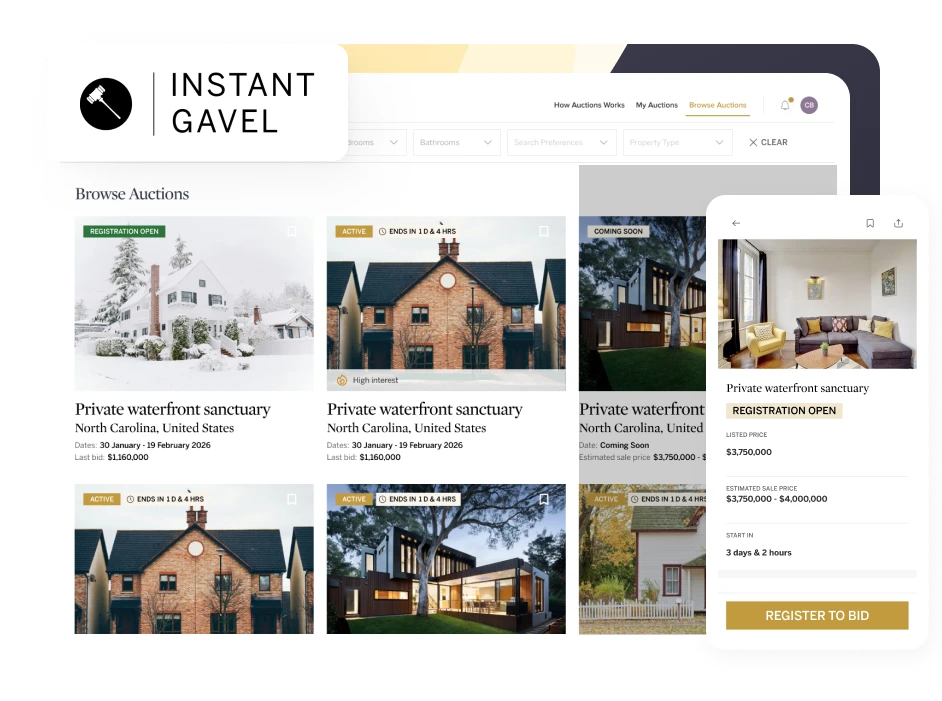
Instant Gavel: Real Estate Auction Platform

Learn More
Concierge Auctions

Smarta

Student Housing Rental Platform

Learn More
Smarta

Property Listing Platform

Real Estate Marketplace

Learn More
Property Listing Platform

AI Powered Property Search

Smart Search by Natural Language Input

Learn More
AI Powered Property Search

Multifamily Data & AI Enablement

Unified Data for Smarter Property Operations

Learn More
Multifamily Data & AI Enablement

Our Software Development Services

Our services cover the full MLS product lifecycle, from defining the product and data model to building integrations, search, analytics, AI capabilities, and long-term platform evolution.
Product Strategy & Design

Define source coverage, search behavior, listing workflows, and the data model before development starts.

  • Business analysis and MLS source review
  • UX research for search and listing flows
  • Web and mobile UI design and prototyping
  • Tech recommendations and implementation roadmap

Learn more

MLS Product Development

Build web and mobile MLS-powered products around high-volume, multi-market listing data, with architecture that supports long-term growth.

  • Data model and sync architecture
  • Portals, brokerage platforms, and agent tools
  • Search and listing experiences
  • Integrations and APIs
  • Legacy system upgrades

Learn more

Data & AI Enablement

Turn MLS and property data into a trusted layer for analytics and AI capabilities, from search and recommendations to valuation and workflow automation.

Learn more

Team Augmentation

Extend your MLS product or data team with engineers who already understand listing data, integrations, and search.

  • Back-End and Front-End Engineers
  • Mobile App Engineers (native and hybrid)
  • Quality Assurance (manual and automated)
  • DevOps; IoT Infrastructure
  • UI/UX Design; Product Management
  • AI and CRM specialists

Learn more

How We Approach MLS Projects

We start with the product and markets you need to support, then design the MLS data layer, integrations, and workflows required to make that roadmap maintainable.

Discovery & Data Design Map MLS sources, feed types, license requirements, product workflows, core entities, and data dependencies before selecting the architecture. This establishes the data model and integration boundaries before implementation locks them in.
Maintenance & Support Monitor MLS schema and endpoint changes, synchronization health, mapping behavior, and source-specific rules so the product remains reliable as MLS requirements and data evolve.
MVP Development Launch the smallest useful product scope around the MLS sources and workflows needed to validate the core experience, then expand coverage on a proven data foundation.
Enhancement & Scaling Expand markets, enrichment, search capabilities, analytics, and AI as listing coverage, user requirements, and product complexity grow — without rebuilding the core data foundation.

Hear From Our Clients

PropTech companies, brokerages, and real estate data businesses on working with ORIL.

Working with ORIL was highly productive and professional. They supported us in building an application that complemented our core product, and their team handled the design and development efficiently. The tools they crafted expanded our initial project scope, and their professionalism and ease of collaboration made our partnership highly productive.

Mike Lapsley
President, Rentometer, Inc.
Mike Lapsley - Oril
ORIL Provides the Best Combination of Value And Quality
Steven Moore, Construction Innovation Manager at Robins & Morton

Robins & Morton is a construction company known for its specialization in healthcare, government, and commercial projects…

How satisfied are you with the overall quality of ORIL's service, and what factors influenced your rating? - Highly satisfied, particularly due to the quality and ease of interaction.

Ben Ryan
Director of Product at Parity
Benjamin Ryan - Oril
How Software Can Save Our Planet
Lauren Kuntz, Founder of gReenvision Energy

gReenvision is a platform that enables individuals to envision a future without carbon dioxide emissions…

We value our partnership with ORIL, especially their communication, understanding of our needs, and efficiency.

Calvin Kent
Founder | Entrepreneur
Calvin Kent Wrent - Oril
Delivering Quality and Results: ORIL’s Impact
Richard Liang, CTO at Brickeye

Brickeye serve the construction industry by providing IoT technologies to help construction improve their productivity, reduce the risk…

As a startup, it’s a difficult task to select a development agency that is both skilled and patient enough to navigate the team through the initial phases of application design and development. ORIL’s service, performance and communication from design to development have been that of any top tier, premium development agency. Our partnership with ORIL has been one of the best decisions we’ve made as an organization and we look forward to continuing to work with the ORIL team through our app’s launch and beyond.

Dave Fox
President & Co-Founder, Smarta Inc.
1597612272259 - Oril

The collaboration is effective, and ORIL always delivers on time. Precise and professional, they provide useful insights, clear documentation, and appropriate tools for the tasks at hand.

Domenick Propati
CSO, ViaTouch Media
Dom Propati ViaTouch Media

ORIL designed the website with an elegant and professional look along with great performances and functionalities, which resulted in the website’s significantly improved conversion rates.

Daniella Gallego
CEO & Founder, Hudson & Leonard
Vacation Testimonials - Oril

Working on an MLS Data or Product Challenge?

Tell us what you're building or fixing: a multi-MLS portal, a RESO Web API migration, a listing data platform, or AI features on top of MLS data. We'll talk through your sources, architecture, and options, and tell you plainly what it would take.


    I have read and accepted the Privacy Policy & Cookie Policy

    FAQ

    What is MLS software development?

    MLS software development is the design and engineering of products that ingest, normalize, store, search, analyze, and use MLS listing data. It can include MLS integrations and data pipelines, but also the search experiences, property intelligence, analytics, AI features, and applications built on top of that data.

    What is the difference between MLS data integration and MLS software development?

    MLS data integration connects and moves listing data between systems. MLS software development uses that integrated data to build product capabilities around it — including search, portals, analytics, workflows, APIs, and AI features.

    What does an MLS data foundation include?

    An MLS data foundation typically includes source integrations, a canonical property and listing model, normalization, entity resolution, validation, history, source lineage, synchronization, and the storage or APIs required by downstream product features.

    What's the difference between an MLS, IDX, and RESO?

    An MLS is the organization and data source. IDX is a framework for broker display of eligible listing data under applicable MLS rules. RESO defines technology and data standards used to exchange MLS data, including the Web API and Data Dictionary.

    What is the RESO Web API, and how does it relate to RETS?

    The RESO Web API is the modern approach for MLS data exchange. RETS is a deprecated legacy transport that RESO no longer develops. Modernization projects typically move RETS-era integrations toward Web API-based architecture.

    Does ORIL provide access to MLS data?

    No. MLS access comes from the relevant MLS, broker, brokerage, or authorized data agreement. ORIL works with the data you are licensed or otherwise authorized to use and builds the software, pipelines, and product capabilities around it.

    Can you combine listings from multiple MLSs into one platform?

    Yes. We map each MLS into a shared model, resolve overlapping property identities, link the underlying listings, and preserve source-specific lineage and display requirements.

    How do you keep MLS listings current?

    We combine incremental replication, scheduled or event-driven synchronization, retries and backfills, and reconciliation processes for status changes, media updates, and removed listings. Frequency and behavior are aligned with product needs and applicable source requirements.

    How do you handle MLS display and compliance rules?

    Rules for attribution, disclaimers, refresh frequency, and permitted fields vary by MLS and feed type (IDX, VOW, or broker back office). We make these rules configurable per source, so compliance is built into the product rather than handled manually.

    Can MLS data be used for analytics, AVMs, or AI?

    Potentially, where the applicable MLS and other data agreements permit the intended use. Normalized listing history and enriched property data can then support analytics, valuation, recommendations, and AI-powered search.

    Can you modernize a legacy listing platform?

    Yes. We migrate RETS-based or hard-coded integrations to RESO Web API, separate ingestion from application logic, and move platforms to cloud-native architecture, with parallel runs to validate data before cutover.